Introduction
The impact of walkable communities on property value
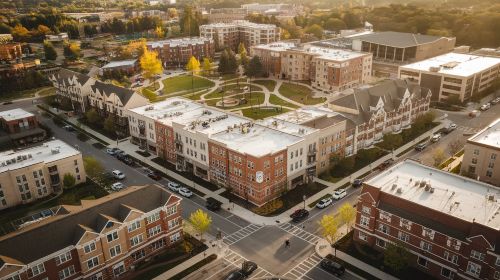
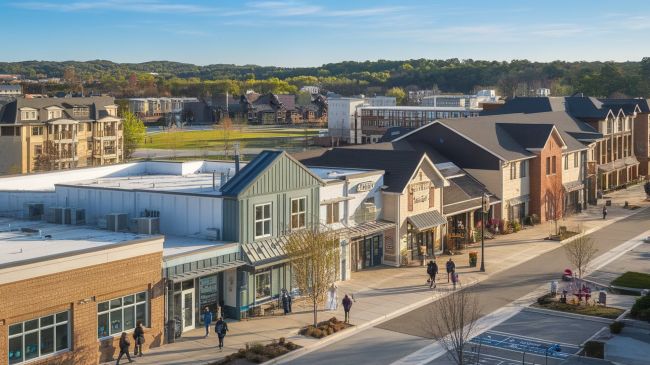
This isn’t the first time I’m sure you’ve noticed the existence of a phenomenon. Some neighborhoods thrive. Shops on the corners. Kids on their way to class. Adults on the patios sipping beverages. That is walkability.
I too have heard it myself. Homes located on a walkable street tend to receive more above average interest. Buyers walk in with grins on their faces. “I own a house here in the next few months,” they proclaim. And yes, they will pay more.
The follow up question will be, how comes? Convenience? There much deeper aspects – societal, political, and economical. There is a lot to be said. You have to appreciate the fact that having a walkable community transforms the street, and in the process property value.
When navigating today’s housing market, buyers are increasingly drawn to properties with smart home features and eco-friendly upgrades. Understanding local market shifts and emerging real estate trends can help both investors and first-time buyers make confident decisions while avoiding costly mistakes.
Quick Fact:
What Makes a Community Walkable?
The Basics of Walkability
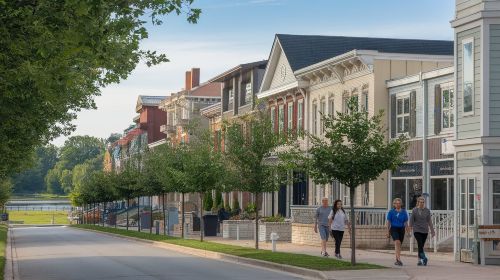
When people say walkable community you may think about the sidewalks. True, but it’s more than that. A real-life walkable environment is one with safe crossings between the environment and the shops, schools and parks. It also contains lighting, benches, and trees. You and I will be able to walk and take coffee, and shop without using the automobile.
I have strolled through streets of neighborhoods where all has a flow. Kids run to the playground. Parents use walking to the grocery store. Elderly members walk to the library. That’s not an accident. It is made possible by city planners, lawyers and zoning rules.
Walk Score and Why It Matters
Did you ever get a Walk Score on real estate listing? The higher score, the higher the ability to live your life without a car. Buyers check it. Investors use it. And there is some truth to this, because the higher the Walk Score of the property, the sooner and at a higher price it will sell.
Role of Legality and Urban Planning.
The snag is that walkability is not something by chance. Zoning codes are determined by the cities to permit mixed-uses spaces. Even new projects are obliged to include bike lanes and sidewalks by some local legislation. No matter if you have ever wondered why one street is alive and the other is dead, zoning is normally the cause.
Walkable Features
| Key Features for Walkable Communities |
|---|
| Continuous sidewalks |
| Shops, schools, and parks within a 10–15 minute walk |
| Street lighting and safety measures |
| Benches, trees, and shaded areas |
| Safe crosswalks and traffic calming |
The Economic Power of Walkability
Why Buyers Pay More
You and I know that people do not just buy a house. They buy a certain way of life. A place of residence in the neighborhood that can be approached on foot is liberating. You can walk to school.
You will not have to drive to purchase a carton of milk and save more on gas and parking. That way of life? It is quite appealing to consumers.
The consumers love-to-eat translates to higher cash to the tags. A home in a walking neighborhood will most likely receive more bids and offers. It will also sell faster. The seller can bargain at a high price. It is elementary economics–the demand is in the market of a seller.
Case study: Arlington, Virginia.
Take Arlington for example. Two years ago, some areas of Arlington resembled any other suburb with congestions and cars. It was the product of inefficient planning.
Walking areas around the metro stations are now in high demand. Talk to individuals who invest in those places and they will say that people want leisure and comfort. They will use money to have it.
How Banks and Insurers See It
Walkability in a home is also valued by all the lenders. A house which is within walking distance to the location is most likely to sell faster. There are also fewer possibilities of a foreclosure of such a home.
The value also increases steadily with time. Insurers have also become more lax. They are aware that traffic accidents are minimal in places where individuals can walk to work.
Mini-Stat Spotlight
| 💡 Research by the American Planning Association found that every point increase in Walk Score can raise property values by up to 0.9%. |
For sellers and investors, it’s important to master the basics of property flipping and strategies for maximizing rental ROI. Knowing how sustainable real estate gains value, planning for closing costs, and even learning how to sell a home by owner can make all the difference in achieving long-term success.
Legal and Policy Drivers
How Laws Shape Walkability
Walkability isn’t magic. It is policy, planning and action on the law. It is the cities who determine placements of buildings. The zoning codes dictate which one can construct; either shops, apartments or single family homes. Zoning will interfere with the corner coffee shops. You get empty sidewalks.
I have represented customers who were not aware of the importance of zoning on value. It can be as easy as having retail on the ground floor to transform a somniferous block into a bustling community. And then the prices of property start to rise.
Value-Added Tax Incentives
Certain cities are incentivizing developers to build projects that are pedestrian-friendly. It can be tax credit, lower charges or expedited permits. This is important to you, as an investor. A pedestrian development is eligible to receive incentives to increase your bottom line.
Walkability Legal Controversies
But it’s not always smooth. I have witnessed litigation against objection to new sidewalks. Others opposed zoning modifications that increased retailing within residential communities. There is a tendency to trade in property rights against community advantages. Nevertheless, there is a tendency towards a pro-walkability position of a public good.
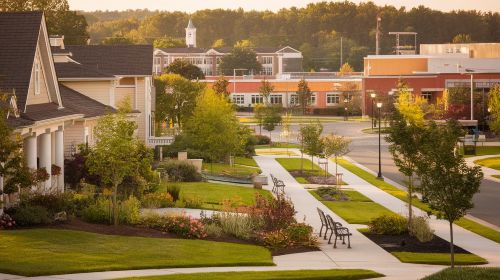
Quick View – Policy Levers That Create Walkability
| Policy Tool | Impact |
|---|---|
| Mixed-use zoning | Shops + homes in same area |
| Tax incentives | Encourages developers to add walkable features |
| Sidewalk mandates | Safer, more attractive neighborhoods |
Social & Lifestyle Benefits That Attract Buyers
The Human Side of Walkability
You’ve probably felt it. Where people can walk, it is alive. Households socialize in the street. Kids ride bikes safely. You have the ability to pick up lunch, get things done, bump into friends, and not to mention, get in the car. That’s social glue. And buyers pay for it.
I have seen families opting to live in smaller houses with an aim of living in a walkable neighborhood. They tell them things such as, we want our children to grow up here. Such an affect is strong. It translates into increased demand and increased prices.
Health and Safety Benefits
The minimization of walking distance encourages wellness. You and I walk more. Obesity rates go down. Stress drops. Crime tends to go down as well since more individuals are out patrolling the area. This is quality of life to the buyers–and they are prepared to spend on it.
Community Culture
Small businesses such as cafes, bookstores, local markets are supported through walkable streets. In assisting those, you build personality. A character neighbourhood is an attractive neighbourhood and charm is valuable. This is why real estate advertisements will always emphasize the proximity to shops and cafes.
Lifestyle Snapshot
Pros and Cons of Walkable Communities
The Balance Buyers Should Know
Let’s face it. The neighborhoods are wonderful to walk in, and there are some negatives. There is no such place and nothing has two sides. It is good to be aware of each of them when purchasing, investing or even during planning.
The city is very vibrant, and some of my clients like that. To his misfortune, it is also a frequent source of grievances. Others have high real estate prices, but have experienced embarrassment in terms of parking. Life is never this easy and it is advisable to come out with the truths.
| ✅ Pros | ❌ Cons |
|---|---|
| Higher property values | Higher upfront costs |
| Lower transportation expenses | Possible parking shortages |
| Community bonding & safety | Noise and more foot traffic |
| Eco-friendly and sustainable | Zoning or legal conflicts |
Shopping on foot remains popular with Buyers.
The individuals do not appear to be repelling without the so-called advantages of investing in a real estate, in addition to the extra cost of having to park the car of convenience. Yes, I will sell parking convenience to have a nicer life is a great description of the issue. That is why the prices do not fall but even grow.
How Walkability Directly Impacts Property Values
The Premium Effect
The plain fact is that buyers are willing to pay more to walk. It is not opinion but studies support that. A residential area close to shops and parks and other educational institutions can be sold at a premium price of 5 to 20 percent to a car-only suburb area.
Why? It is not a mere purchase of walls and a roof. You’re buying access. You are purchasing the freedom of not being attached to the car each time you need to drive to work.
A Tale of Two Homes
There are two houses almost the same:
- House A is located in a rather quiet suburb, yet you must have a car to do everything.
- House B is smaller, is nearer to downtown, and has Walk Score of 85.
Guess which one sells faster? House B. Buyers fight for it. They don’t just see a house. They experience the lifestyle, freedom and saving on car costs.
What Buyers Really Value
It’s not only the location. It’s the walk to the cafe. The safe route to school. The local farmers market on Saturdays. This information carries emotional charge–and emotive charge is cash.
Quick Comparison Chart
| Feature | Car-Dependent Area | Walkable Area |
|---|---|---|
| Average Property Value Growth | 2–3% annually | 5–8% annually |
| Buyer Demand | Moderate | High |
| Lifestyle Perks | Limited | Rich & varied |
Investor & Legal Insights
What Investors Should Know
A walkability is a measure to an investor such as school scores or rates of crime. The walk-through properties retain their value more easily in a slump economy and are more readily rented, commonly to long-term tenants eager to pay a premium on that kind of life.
I have observed empty waiting list by landlords in such neighborhoods and homes in car-dependent suburbs being empty. This indicates the direction demand is taking.
Risks to Consider
Gentrification is a two-fold sword. The result of the increase in the number of higher income residents in the area is often that long term residents must pay higher rents. Noise complaint or rezoning are common. When purchasing, you must learn the legal climate peculiarities. Investment- You should always examine the local zoning changes.
Property Security Markets Resilience.
In case the region is hit by an economic shock, residential walkable communities serve as a shock absorber. The suburban population find it extremely difficult to adapt to the increased fuel prices. That condittion causes your investment to be on the safer side in the long running period.
Investor Tip Box
Case Studies & Real Examples
Story 1: The Downtown Turnaround
I was walking through one of the downtowns several years ago, and it was not busy after 5 PM. Stores closed. Streets dark. Property prices flat. Then there was a redevelopment strategy: expanded sidewalks, bike paths, outdoor entertainment licenses. In five years, the same area was a buzzword. Housing prices soared, companies flourished and customers queued. Walkability made it happen.
Story 2: From Suburb to Hotspot
Take a suburb outside Denver. For decades, it was car-only. Then the city voted to permit a mixed-use zoning regulation. Developers overbuilt the shops with apartments, plaza, and safe walkways. Seniors were happy with the convenience of families moving in. Rental demand increased among investors. Prices were escalating more rapidly than the surrounding non-walkable regions.
Story 3: The Legal Angle
Not every story is smooth. In another instance, the city was taken to court by its citizens regarding a planned pedestrian plaza. They feared they would be deprived of parking. The city won the case after a protracted court battle. Nowadays, it is the center of the town. And property values, in the immediate vicinity, shot up.
Lessons from Real Examples
Final Thoughts — The Future of Walkable Communities
Where We’re Heading
You and I can see that the world is changing. The term 15-minute city is discussed in more cities. That is work, school, groceries, healthcare, all in fifteen minutes, walk, or bike ride. It’s not science fiction. It has already been tested in Paris, Portland, and Melbourne.
The Legal Side of Tomorrow
Laws will follow this trend. Expect more zoning reforms. Cities will decrease the demand to park. Others will require green belt areas or streets devoid of cars. That is new opportunities to the property owners, but also the necessity to keep up to date.
Reasons Why Walkability Will Remain an asset.
The truth is as follows: fuel prices get higher, health issues become more prominent, and humans need a community. Walkability addresses the three. That makes it more than a fad. It is becoming a lasting influence on the way of buying a house. And value where the buyers turn.
Future Snapshot
| 🌍 15-minute cities rising | 📜 Zoning reforms accelerating | 💰 Property premiums holding strong |